
Portable power station: EcoFlow, Bluetti and Jackery compared
Which capacity, which output, which brand? We compare the models that matter on their real specifications, and we also tell you why you might not want them.
To back up a few devices (router, laptop, phones), 250 to 600 Wh is enough. For camping or an off-grid weekend, aim for about 1 kWh. To keep a fridge running through an outage, start at 2 kWh or more. Capacity in Wh sets how long it lasts; output in W sets what you can plug in at the same time.
Our selection of portable power stations
Six representative models from the three brands, from the small backup unit to the 2 kWh class for the home. Specifications come from the official pages; prices change often, so check the manufacturer’s page for the current offer.
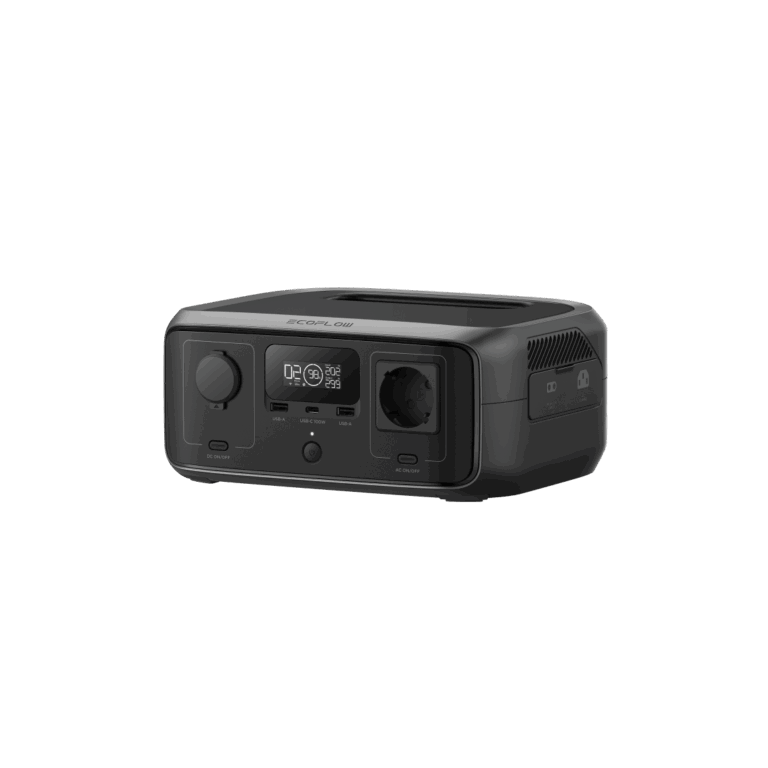
EcoFlow RIVER 3
- 245 Wh
- 300 W (600 W with X-Boost)
- UPS under 20 ms
- 1 h charge
The most compact pick: enough for a router, a laptop, phones or a drone, with a charge time of about one hour.
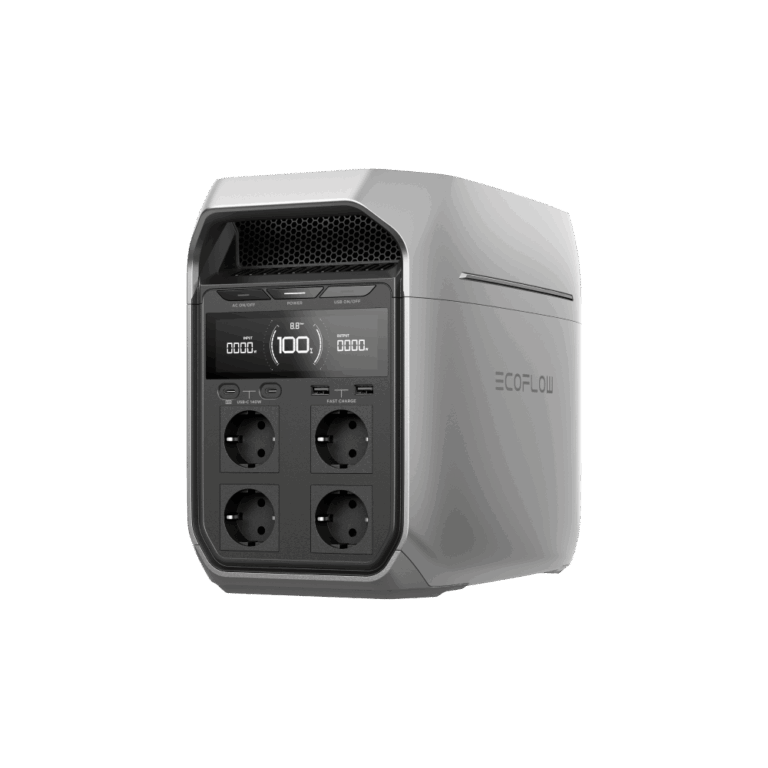
EcoFlow DELTA 3 Plus
- 1,024 Wh
- 1,800 W (3,600 W surge)
- Solar input up to 1,000 W
- 12.5 kg
The all-rounder of the 1 kWh class: fast wall charging (1,500 W, full charge in 56 minutes according to EcoFlow), built-in UPS under 10 ms for a router or NAS, and expandable up to 5 kWh with extra batteries.
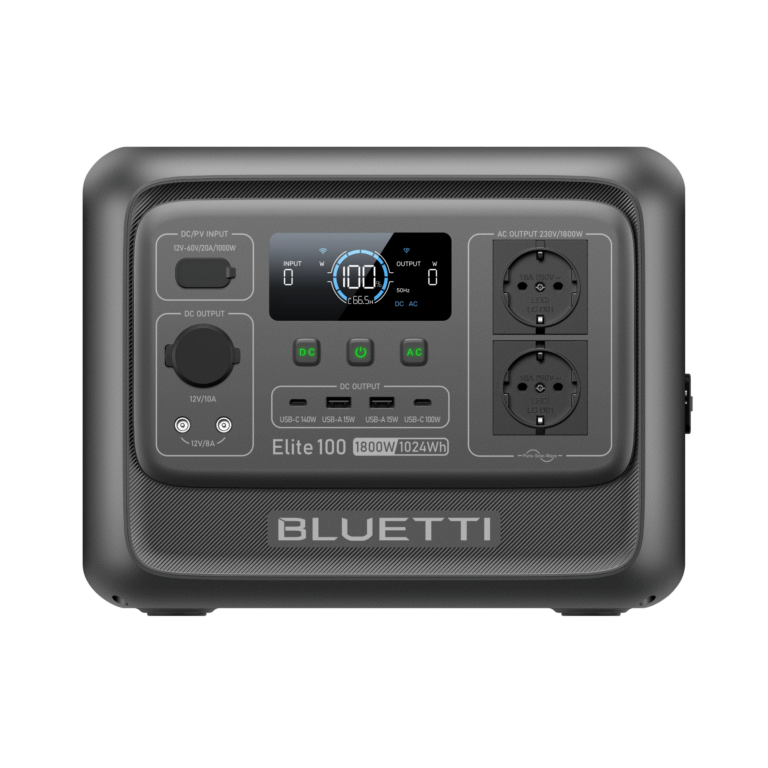
Bluetti Elite 100 V2
- 1,024 Wh
- 1,800 W
- 11.5 kg
- LiFePO₄
The same 1,800 W output as the AC180 but much lighter: 11.5 kg versus 17 kg. 1,200 W AC input, roughly 80% charged in 45 minutes.
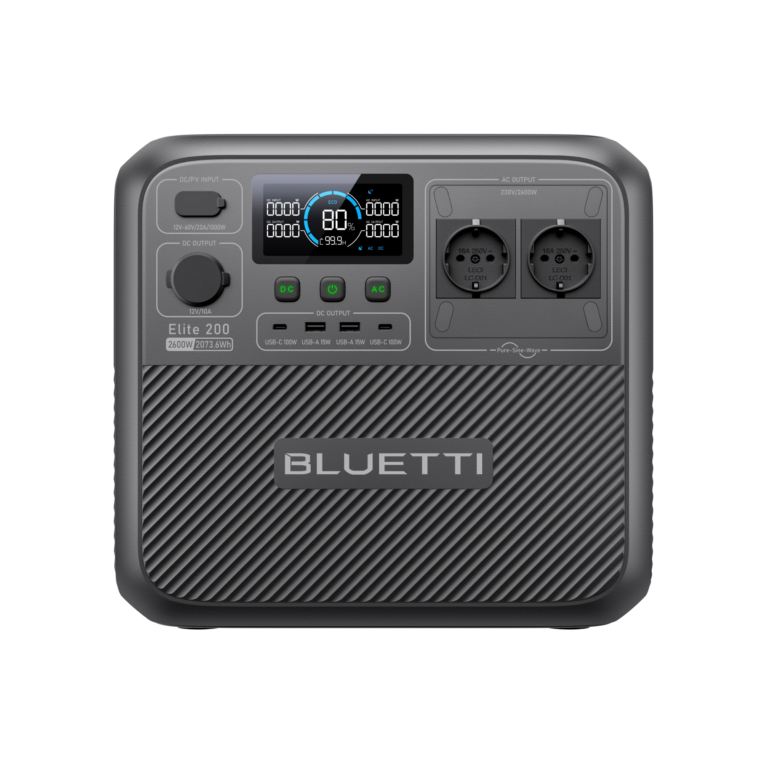
Bluetti Elite 200 V2
- 2,073.6 Wh
- 2,600 W
- 24.2 kg
- LiFePO₄
Over 2 kWh and 2,600 W: enough for a fridge, a computer, lighting and small appliances during an outage, with AC input up to 1,800 W.
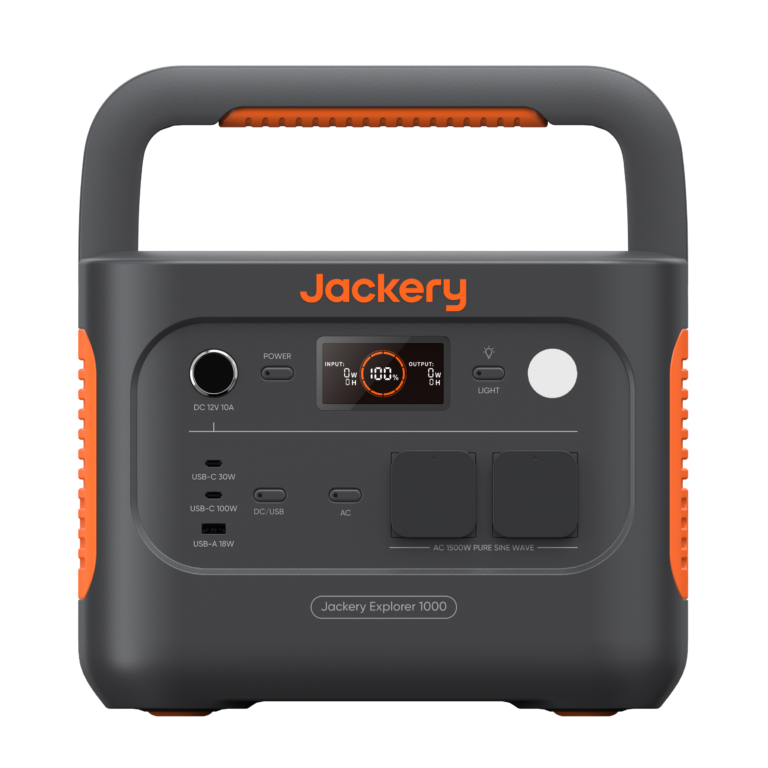
Jackery Explorer 1000 v2
- 1,070 Wh
- 1,500 W
A 1 kWh model from Jackery’s v2 line: enough to power a laptop, a mini-fridge, light tools and camping gear.
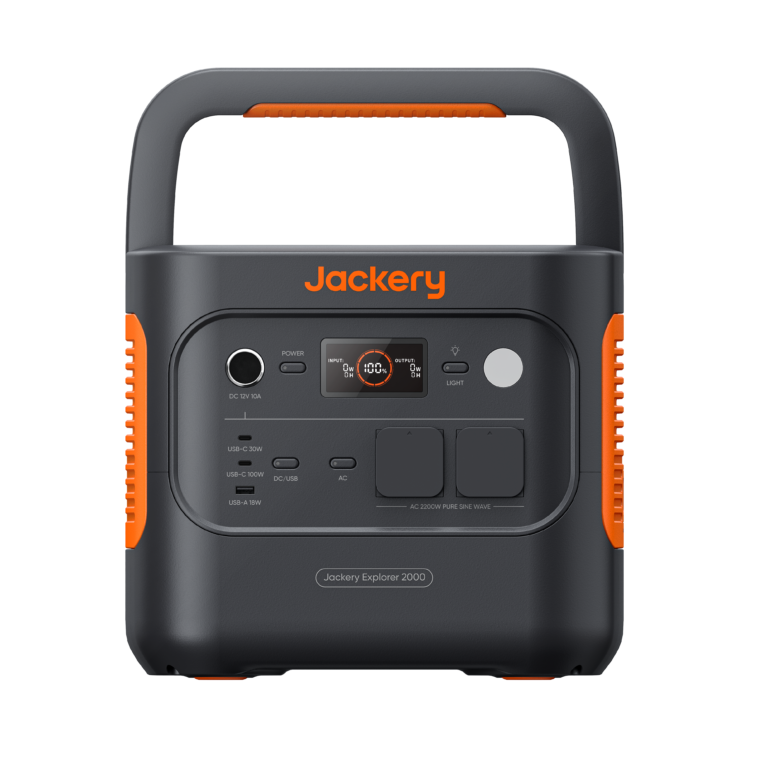
Jackery Explorer 2000 v2
- 2,042 Wh
- 2,200 W
Over 2 kWh for bigger needs: fridge, coffee machine, power tools, with 2,200 W of output.
At a glance
| Model | Capacity | AC output | Worth noting |
|---|---|---|---|
| EcoFlow RIVER 3 | 245 Wh | 300 W (600 W X-Boost) | Very compact, 1 h charge |
| EcoFlow DELTA 3 Plus | 1,024 Wh | 1,800 W | 1,500 W AC charging, expandable to 5 kWh |
| Bluetti Elite 100 V2 | 1,024 Wh | 1,800 W | 11.5 kg, LiFePO₄ |
| Bluetti Elite 200 V2 | 2,073.6 Wh | 2,600 W | AC input up to 1,800 W |
| Jackery Explorer 1000 v2 | 1,070 Wh | 1,500 W | 1 kWh v2 line |
| Jackery Explorer 2000 v2 | 2,042 Wh | 2,200 W | For bigger loads |
Which power station for which use?
Backup and remote work
Router, laptop, phones: 250 to 600 Wh covers several hours. This is where the RIVER 3 and small Jackery units sit.
Camping and van life
About 1 kWh for a camping fridge, lighting, a laptop and device charging over a weekend.
Home backup
2 kWh and up, 2,000 W or more: fridge, internet box, lighting and small appliances during an outage.
Solar charging
Check the solar input the unit accepts: it decides how many panels you can use and how fast it recharges.
Frequently asked questions
What is the difference between Wh and W?
Watt-hours (Wh) measure the energy stored, so how long it lasts. Watts (W) measure the power the station can deliver at any moment. A 1,024 Wh, 1,800 W station can run one 1,800 W appliance at most, for a little over half an hour.
How long does a 1,000 Wh power station run a fridge?
A fridge draws on average 60 to 120 W while the compressor runs. With a station of about 1,000 Wh, expect roughly 8 to 12 hours in practice, depending on the model, the temperature and conversion losses.
EcoFlow, Bluetti or Jackery: which one should I pick?
All three brands make solid models. EcoFlow stands out for fast charging and expandability, Bluetti for the light Elite 100 V2 and the powerful Elite 200 V2, Jackery for a very readable range. The right choice depends first on your use, not the brand.
Can a portable power station be recharged with solar panels?
Yes, if it accepts solar input. EcoFlow’s DELTA 3 Plus, for example, accepts up to 1,000 W of panels. Check the maximum input voltage and power before buying panels.
What does LiFePO₄ mean?
It is lithium iron phosphate chemistry. It withstands many charge cycles, over 3,000 according to several manufacturers, and stays stable across temperatures, which is why recent stations commonly use it.